In many companies, a large part of the IT runs on systems that should have been replaced long ago. This so-called legacy IT is not a marginal phenomenon, but often the backbone of critical processes - from accounting to production. This is precisely where the problem lies.
What does Legacy IT mean in concrete terms?
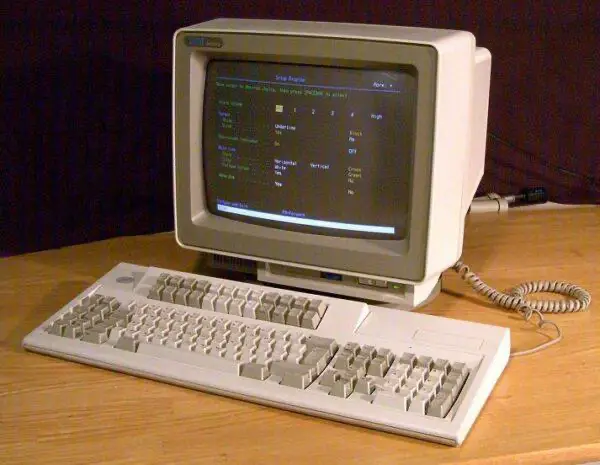
The term describes old software and hardware that is still in use even though it is technically obsolete. This can be:
- self-developed applications from the 90s
- Old databases without modern support
- Operating systems without security updates
- Specialised software that has never been replaced
These systems often still work - but only just.
Why companies stick to it
It seems irrational to continue operating old systems. In practice, there are clear reasons for this:
- Dependence on critical processes
Many core functions run exclusively on these systems. A failure would have a direct impact on the business. - High conversion costs
A migration not only means new software, but also training, adaptation of processes and possible downtimes. - Lack of knowledge
Often nobody knows exactly how the system works internally. Documentation is missing, developers are no longer available.
The real problems start in the background
Legacy IT is not just «old» - it creates concrete risks:
Security gaps
Without updates, attack surfaces are created. Known vulnerabilities remain open.
Incompatibility
New systems are difficult to connect. Interfaces are missing or unstable.
High maintenance costs
Spare parts are difficult to obtain and specialised knowledge is expensive.
Low flexibility
Adjustments take a long time or are not possible at all.
When old systems block new projects
A central problem: Legacy IT prevents innovation.
Modern approaches such as cloud, automation or AI often cannot be integrated. Companies are then faced with a conflict of objectives:
- either modernise and take risks
- or remain stable and lose competitiveness
Many choose to stand still - and pay the price in the long term.
Typical strategies for dealing with legacy IT
Complete replacement is rarely possible immediately. This is why interim solutions are created:
Step-by-step modernisation
Parts of the system are gradually being replaced.
Building interfaces
Old systems are connected via APIs without changing them directly.
Parallel operation
New and old systems run simultaneously - often for years.
None of these solutions is perfect. They shift the problem rather than solving it.
Legacy IT is not a technical detail, but a structural risk. Systems that used to provide stability are now becoming a brake pad.
The real challenge lies not in replacing the technology, but in dealing with dependencies, knowledge and costs. Those who ignore this will remain capable of acting - but only in the short term.
Your partner for hardware and software - Flying Supporter
Do you have any questions?
We will be happy to help you.

 Deutsch
  English (UK)
  Français
  Italiano